Saturday, February 4, 2023

Mayor motivación de los empleados y satisfacción laboral debido a la autonomía y

Mayor motivación de los empleados y satisfacción laboral debido a la autonomía y la flexibilidad [ editar ]

De acuerdo con la teoría de las características del trabajo (1976), un aumento en la autonomía y la retroalimentación de los empleados conduce a una mayor motivación laboral, satisfacción con las oportunidades de crecimiento personal, satisfacción laboral general , mayor desempeño laboral y menor ausentismo y rotación. La autonomía aumentó la satisfacción de los trabajadores remotos al reducir los conflictos entre el trabajo y la familia, especialmente cuando a los trabajadores se les permitió trabajar fuera del horario laboral tradicional y ser más flexibles para fines familiares. La autonomía fue la razón de un aumento en el compromiso de los empleadoscuando aumentó la cantidad de tiempo dedicado al trabajo remoto. Los trabajadores remotos tienen más flexibilidad y pueden cambiar el trabajo a diferentes horas del día y diferentes ubicaciones para maximizar su rendimiento. La autonomía del trabajo a distancia permite la organización del trabajo para reducir el conflicto trabajo-familia y los conflictos con las actividades recreativas. Sin embargo, los estudios también muestran que la autonomía debe equilibrarse con altos niveles de disciplina si se quiere mantener un equilibrio saludable entre trabajo y ocio. [27] [28]

El trabajo a distancia puede facilitar que los trabajadores equilibren sus responsabilidades laborales con su vida personal y funciones familiares, como el cuidado de los niños o de los padres ancianos. El trabajo remoto mejora la eficiencia al reducir el tiempo de viaje y reduce el tiempo de viaje y el tiempo de congestión del tráfico , lo que mejora la calidad de vida . [24] [29]

Brindar la opción de trabajar de forma remota o adoptar un horario de trabajo híbrido ha sido un beneficio incentivador que las empresas utilizan en las nuevas contrataciones. [30]

Hybrid es un modelo de trabajo flexible que permite a los empleados dividir su tiempo entre trabajar en la oficina y trabajar desde casa.

Un metanálisis de 2007 de 46 estudios de trabajo remoto que involucró a 12 833 empleados realizado por Ravi Gajendran y David A. Harrison en el Journal of Applied Psychology , publicado por la Asociación Estadounidense de Psicología (APA), encontró que el trabajo remoto tiene efectos en gran medida positivos en los empleados. ' satisfacción laboral, autonomía percibida, niveles de estrés, desempeño laboral calificado por el gerente y (menor) conflicto trabajo-familia, y menor intención de rotación . [31] [32]

Beneficios ambientales 

--
You received this message because you are subscribed to the Google Groups "1top-oldtattoo-1" group.
To unsubscribe from this group and stop receiving emails from it, send an email to 1top-oldtattoo-1+unsubscribe@googlegroups.com.
To view this discussion on the web visit https://groups.google.com/d/msgid/1top-oldtattoo-1/CAMm_%2ByYtjbfvTnSGXozsoMcmYp3X8Km3qz-%3D_kNjFr7NZwXE8g%40mail.gmail.com.

Reducción de costos

El trabajo remoto puede reducir los costos para las organizaciones, incluido el costo del espacio de oficina y los gastos relacionados, como estacionamiento, equipo de cómputo, muebles, suministros de oficina, iluminación y calefacción, ventilación y aire acondicionado . [21] Ciertos gastos de los empleados, como los gastos de oficina, pueden transferirse al trabajador remoto, aunque esto es objeto de demandas. [22]

El trabajo remoto también reduce los costos para el trabajador, como los costos de viaje/desplazamiento [23] [24] y vestimenta. [25] También permite la posibilidad de vivir en una zona más económica que la de la oficina. [26]

--
You received this message because you are subscribed to the Google Groups "1top-oldtattoo-1" group.
To unsubscribe from this group and stop receiving emails from it, send an email to 1top-oldtattoo-1+unsubscribe@googlegroups.com.
To view this discussion on the web visit https://groups.google.com/d/msgid/1top-oldtattoo-1/CAMm_%2ByYNBOE6z7jjB7MnnSpGvdXRh%2BYb8Qz_x_AFByG85uGR6w%40mail.gmail.com.

Según una encuesta de Gallup de septiembre de 2021, el 45 % de los empleados estadounidenses

Según una encuesta de Gallup de septiembre de 2021, el 45 % de los empleados estadounidenses a tiempo completo trabajaban desde casa, incluido el 25 % que trabajaba desde casa todo el tiempo y el 20 % que trabajaba desde casa parte del tiempo. [18]

En 2020, el 12,3 % de las personas empleadas, incluido el 13,2 % de las mujeres y el 11,5 % de los hombres, en la Unión Europea que tenían entre 15 y 64 años, solía trabajar desde casa. Por país, el porcentaje de trabajadores que trabajaban desde casa era más alto en Finlandia (25,1 %), Luxemburgo (23,1 %), Irlanda (21,5 %), Austria (18,1 %) y los Países Bajos (17,8 %) y el más bajo en Bulgaria ( 1,2 %), Rumanía (2,5 %), Croacia (3,1 %), Hungría (3,6 %) y Letonia (4,5 %). [19]

En 2021, en los EE. UU., el 91 % de las personas que trabajan desde casa dijeron que les gustaría seguir trabajando de forma remota en el futuro. En el estudio de Gallup de septiembre de 2021, el 54 % de los trabajadores dijeron que creían que la cultura de su empresa no cambiaría con el trabajo remoto, mientras que el 12 % creía que mejoraría y el 33 % predijo que se deterioraría.

Según la Oficina de Administración de Personal de los Estados Unidos , en el año fiscal 2020, el 50 % de todos los trabajadores federales de EE. UU. eran elegibles para trabajar de forma remota y las agencias ahorraron más de $180 millones gracias al trabajo remoto en el año fiscal 2020. [20]

Beneficios potenciales 

--
You received this message because you are subscribed to the Google Groups "1top-oldtattoo-1" group.
To unsubscribe from this group and stop receiving emails from it, send an email to 1top-oldtattoo-1+unsubscribe@googlegroups.com.
To view this discussion on the web visit https://groups.google.com/d/msgid/1top-oldtattoo-1/CAMm_%2ByZdaRWO2pfCRUmgwv6zMTy7yBZPd%2B%2BtiEeSRBHu78nuyg%40mail.gmail.com.

Technology or equipment

Technology or equipment issues[edit]

Employees having inadequate equipment or technology can prevent work from getting done. A FlexJobs survey found 28% had technical problems and 26% reported WI-FI issues.[53]

Loss of control by management[edit]

Additionally, remote work may not always be seen positively by management due to fear of loss of managerial control.[100]

A study found that managers had a bias again employees who did not work in the office. Manager attributed the amount of time they saw an employee in the office more than the work than the contribution that was made.[55]

--
You received this message because you are subscribed to the Google Groups "1top-oldtattoo-1" group.
To unsubscribe from this group and stop receiving emails from it, send an email to 1top-oldtattoo-1+unsubscribe@googlegroups.com.
To view this discussion on the web visit https://groups.google.com/d/msgid/1top-oldtattoo-1/CAMm_%2ByY7KDKRyoejh8o7yEd6gvt71a_5tPehgO2GrQLBQy-RHQ%40mail.gmail.com.

Isolation and mental health

Research by Julianne Holt-Lunstad, a psychologist and professor at Brigham Young University, showed the most important predictor of living a long life is social integration.[90][92]

A study by researchers at the University of Chicago showed that routine interactions with people benefits mental health.[90][93]

In a 2018 study, Sigal G. Barsade, an organizational behavior professor at the Wharton School of the University of Pennsylvania, found that lonelier employees feel less committed to their employers and also to their co-workers.[90][94]

Isolation due to remote work also hinders formation of friendships.[95][26]

Although several scholars and managers had previously expressed fears that employee careers might suffer and workplace relationships might be damaged because of remote work, a 2007 study found that there are no generally detrimental effects on the quality of workplace relationships and career outcomes. Remote work actually was found to positively affect employee-supervisor relations and the relationship between job satisfaction and turnover intent was in part due to supervisor relationship quality. Only high-intensity remote work (where employees work from home for more than 2.5 days a week) harmed employee relationships with co-workers, even though it did reduce work-family conflict.[31][32]

Individuals may differ in their reactions to the job characteristics in remote work. According to job characteristics theory, the personal need for accomplishment and development ("growth need strength")[62] influences how much an individual will react to the job dimensions of remote work. For instance, those individuals high in "growth need strength" will have a more positive reaction to increased autonomy and a more negative reaction to decreased feedback in remote work than those individuals low in "growth need strength".

A 2021 report from Prudential found that the majority of people prefer the hybrid model, and that two in three workers believe in-person interactions are important for career growth. The report also found that fully remote workers felt less entitled to take a vacation and believed they must be available around the clock. One in four workers felt isolated, and reported this as a major challenge. Ultimately, most workers want flexibility but do not want to give up the benefits available from working in-person with colleagues.[96]

Information security[edit]


--
You received this message because you are subscribed to the Google Groups "1top-oldtattoo-1" group.
To unsubscribe from this group and stop receiving emails from it, send an email to 1top-oldtattoo-1+unsubscribe@googlegroups.com.
To view this discussion on the web visit https://groups.google.com/d/msgid/1top-oldtattoo-1/CAMm_%2ByacYeyuUG5b3ZOtB34Qy3jUo-Zc9nae8Yw4rT%2BP5EKM4A%40mail.gmail.com.

Challenges to team building; focus on the individual

Communication and getting to know other teammates happen naturally when everyone works in the same space, so with remote work, employees and supervisors have to work harder to maintain relationships with co-workers. This is especially important for new employees so that they learn organizational habits even when working remotely.[88]

Three of the five job attributes: skill variety, task identity, and task significance, influence how much employees think their jobs are meaningful.[63] Skill variety is the degree of activities and skills that a job requires in order to complete a task. An increase in skill variety is thought to increase the challenge of the job. Increasing the challenge of the job increases the individual's experienced meaningfulness, how much the individual cares about work, and finds it worthwhile.[89][63] Remote work may not directly affect skill variety and task meaningfulness for the individual compared to when he or she worked in an office; however, skill variety and meaningfulness of individual tasks can increase when working in a group. If the work done at home is focused on the individual rather than the team, there may be fewer opportunities to use a variety of skills.[76]

Task identity is the degree that the individual sees work from beginning to end or completes an identifiable or whole piece of work rather than only a small piece. Task significance is the degree that the individual feels his or her work has a substantial impact on the lives or work of other people within the organization or outside the organization.[63][76] Remote work may not change the job characteristics of skill variety, task identity, and task significance compared to working in an office; however, the presence of these characteristics will influence remote workers' work outcomes and attitudes.

In his book, "Together: The Healing Power Of Human Connection In A Sometimes Lonely World," U.S. Surgeon General Vivek Murthy asserts that face-to-face meetings, in-person collaboration, and "micro-moments" of community at work are what give people the essential feeling of belongingness and being part of a team.[90][91]


--
You received this message because you are subscribed to the Google Groups "1top-oldtattoo-1" group.
To unsubscribe from this group and stop receiving emails from it, send an email to 1top-oldtattoo-1+unsubscribe@googlegroups.com.
To view this discussion on the web visit https://groups.google.com/d/msgid/1top-oldtattoo-1/CAMm_%2BybJVN7qO88-bo1C%3DBsG1isYvVLM0Gd1kV7p0FAttavCDw%40mail.gmail.com.

Friday, February 3, 2023

You have been added to 1top-oldtattoo-1

Hi tattoous1.blogemailing8@blogger.com,
tattoous1@gmail.com added you to the 1top-oldtattoo-1 group.

Google Groups allows you to create and participate in online forums and email-based groups with a rich community experience. You can also use your Group to share documents, pictures, calendars, invitations, and other resources. Learn more.

If you do not wish to be a member of this group you can send an email to 1top-oldtattoo-1+unsubscribe@googlegroups.com or follow this unsubscribe link. If you believe this group may contain spam, you can also report the group for abuse. For additional information see our help center.

If you do not wish to be added to Google Groups in the future you can opt out here.

Friday, January 27, 2023

Money acts as a standard measure


Measure of value

A unit of account (in economics)[23] is a standard numerical monetary unit of measurement of the market value of goods, services, and other transactions. Also known as a "measure" or "standard" of relative worth and deferred payment, a unit of account is a necessary prerequisite for the formulation of commercial agreements that involve debt.

Money acts as a standard measure and a common denomination of trade. It is thus a basis for quoting and bargaining of prices. It is necessary for developing efficient accounting systems.

Standard of deferred payment

While standard of deferred payment is distinguished by some texts,[22] particularly older ones, other texts subsume this under other functions.[4][20][21][clarification needed] A "standard of deferred payment" is an accepted way to settle a debt—a unit in which debts are denominated, and the status of money as legal tender, in those jurisdictions which have this concept, states that it may function for the discharge of debts. When debts are denominated in money, the real value of debts may change due to inflation and deflation, and for sovereign and international debts via debasement and devaluation.

Store of value

To act as a store of value, money must be able to be reliably saved, stored, and retrieved—and be predictably usable as a medium of exchange when it is retrieved. The value of the money must also remain stable over time. Some have argued that inflation, by reducing the value of money, diminishes the ability of the money to function as a store of value.[4][failed verification]

money is used to intermediate the exchange of goods and services


Medium of exchange

When money is used to intermediate the exchange of goods and services, it is performing a function as a medium of exchange. It thereby avoids the inefficiencies of a barter system, such as the inability to permanently ensure "coincidence of wants". For example, between two parties in a barter system, one party may not have or make the item that the other wants, indicating the non-existence of the coincidence of wants. Having a medium of exchange can alleviate this issue because the former can have the freedom to spend time on other items, instead of being burdened to only serve the needs of the latter. Meanwhile, the latter can use the medium of exchange to seek for a party that can provide them with the item they want.

countries adopted fiat currencies

 almost all countries had adopted the gold standard, backing their legal tender notes with fixed amounts of gold.

After World War II and the Bretton Woods Conference, most countries adopted fiat currencies that were fixed to the U.S. dollar. The U.S. dollar was in turn fixed to gold. In 1971 the U.S. government suspended the convertibility of the dollar to gold. After this many countries de-pegged their currencies from the U.S. dollar, and most of the world's currencies became unbacked by anything except the governments' fiat of legal tender and the ability to convert the money into goods via payment. According to proponents of modern money theory, fiat money is also backed by taxes. By imposing taxes, states create demand for the currency they issue.[17]

Functions

In Money and the Mechanism of Exchange (1875), William Stanley Jevons famously analyzed money in terms of four functions: a medium of exchange, a common measure of value (or unit of account), a standard of value (or standard of deferred payment), and a store of value. By 1919, Jevons's four functions of money were summarized in the couplet:

Money's a matter of functions four,
A Medium, a Measure, a Standard, a Store.[18]

This couplet would later become widely popular in macroeconomics textbooks.[19] Most modern textbooks now list only three functions, that of medium of exchange, unit of account, and store of value, not considering a standard of deferred payment as a distinguished function, but rather subsuming it in the others.[4][20][21]

There have been many historical disputes regarding the combination of money's functions, some arguing that they need more separation and that a single unit is insufficient to deal with them all. One of these arguments is that the role of money as a medium of exchange conflicts with its role as a store of value: its role as a store of value requires holding it without spending, whereas its role as a medium of exchange requires it to circulate.[22] Others argue that storing of value is just deferral of the exchange, but does not diminish the fact that money is a medium of exchange that can be transported both across space and time. The term "financial capital" is a more general and inclusive term for all liquid instruments, whether or not they are a uniformly recognized tender.

History of money


The use of barter-like methods may date back to at least 100,000 years ago, though there is no evidence of a society or economy that relied primarily on barter.[7][8] Instead, non-monetary societies operated largely along the principles of gift economy and debt.[9][10] When barter did in fact occur, it was usually between either complete strangers or potential enemies.[11]

Many cultures around the world eventually developed the use of commodity money. The Mesopotamian shekel was a unit of weight, and relied on the mass of something like 160 grains of barley.[12] The first usage of the term came from Mesopotamia circa 3000 BC. Societies in the Americas, Asia, Africa and Australia used shell money—often, the shells of the cowry (Cypraea moneta L. or C. annulus L.). According to Herodotus, the Lydians were the first people to introduce the use of gold and silver coins.[13] It is thought by modern scholars that these first stamped coins were minted around 650 to 600 BC.[14]

Song Dynasty Jiaozi, the world's earliest paper money

The system of commodity money eventually evolved into a system of representative money.[citation needed] This occurred because gold and silver merchants or banks would issue receipts to their depositors, redeemable for the commodity money deposited. Eventually, these receipts became generally accepted as a means of payment and were used as money. Paper money or banknotes were first used in China during the Song dynasty. These banknotes, known as "jiaozi", evolved from promissory notes that had been used since the 7th century. However, they did not displace commodity money and were used alongside coins. In the 13th century, paper money became known in Europe through the accounts of travellers, such as Marco Polo and William of Rubruck.[15] Marco Polo's account of paper money during the Yuan dynasty is the subject of a chapter of his book, The Travels of Marco Polo, titled "How the Great Kaan Causeth the Bark of Trees, Made Into Something Like Paper, to Pass for Money All Over his Country."[16] Banknotes were first issued in Europe by Stockholms Banco in 1661 and were again also used alongside coins. The gold standard, a monetary system where the medium of exchange are paper notes that are convertible into pre-set, fixed quantities of gold, replaced the use of gold coins as currency in the 17th–19th centuries in Europe. These gold standard notes were made legal tender, and redemption into gold coins was discouraged. By the beginning of the 20th century, almost all countries had adopted the gold standard, backing their legal tender notes with fixed amounts of gold.

Wednesday, January 25, 2023

Small Businesses Are a Great Place to Start Your Career

Does it seem like everyone is jockeying for a job with the Big Four? Or, maybe you've started working for one, and it's not going as well as you thought it would. Sure, you have a generous salary, but perhaps you're tired of working from a windowless cubicle or fighting heavy traffic every day.

If you're burned out by working for large corporations, a job with a small business could be a smart move—and one that could pay huge dividends for your career. Here's how.

What Is a Small Business?

A small business isn't just your local cupcake bakery with four employees. The Small Business Administration (SBA) defines a small business as a company with up to 1,500 employees that generates no more than $41.5 million in annual revenue. And small businesses employ more than 40% of working Americans.

The Advantages of Working for a Small Business

There are numerous benefits to working for a small business. Here are just a few reasons to consider a job with a small company for your next career move.

Expand Your Skill Set

Employees who work for a small business may wear a lot of hats. You might be helping manage the ecommerce store in addition to updating social media and writing ad copy. Or, you might not only work as a UX Designer creating mock-ups of apps, but you could also be helping market the product.

Working for a small business, you'll get to try many new things to build your skill set for future opportunities.

Enjoy More Flexibility

A large, widely-known Fortune 500 company may not be as willing to embrace remote or hybrid work, although many are shifting their views. Attempts to negotiate flexible work options can be difficult since there can be more red tape with corporate policy.

A small business has less bureaucracy, so it can be easier to negotiate the hybrid or remote work options you desire.

Easily Access Leadership

At a large company, there's a slim chance you'll ever interact with senior leaders, like the CEO. However, at a small company, you might be meeting with the CEO regularly to provide updates as the sole marketer. Or, they may hold company town halls to discuss policy changes or goals for the upcoming quarter.

This access allows you to demonstrate your value to senior leadership, which means that working for a small business could provide opportunities to grow your career within the company.

Start Working for a Small Business Today

While a small business may not come with an internationally-known name or large salary, there can be numerous benefits to working for one. A small company can provide you the valuable opportunity to learn new skills, enjoy flexible working options, and meet with senior leadership.

Ready to enjoy the flexibility of working for a small business? Since 2007, FlexJobs has provided job seekers with access to a scam-free jobs board to help them land their next hybrid or remote role. Explore the benefits of a FlexJobs membership today!

Teacher Builds Better Balance for Fun in Retirement

Many people think of retirement as a period in life full of baking cookies, swinging on the porch, and golfing. But for many retirees, that routine might sound like a nice vacation for a little while but becomes tedious on a daily basis.

Karen J. was one of those retirees. She didn't want to settle quietly into her hobbies after she retired from teaching. The desire to fill up some of her time and satisfy her quest for continual learning took her back to the classroom part-time.

However, it didn't take long for her to realize a traditional teaching role in a classroom was no longer an ideal fit for her retirement years. "Being inside the school working with a very limited and tight schedule, I decided I wanted more flexibility," Karen says.

Seeking a Better Work-Life Balance in Retirement

Karen also needed a job that provided more consistent income to add to her savings and boost her hobby fund. "Not getting a salary when schools are closed, on holidays, during vacation weeks, or over the entire summer was a bit stressful!"

But Karen found that it was challenging to find a part-time job that matched her professional skills and experience on her own, which led her to FlexJobs.

Discovering New Options

Through FlexJobs, Karen was able to land not one but two part-time, flexible positions with TutorMe and Littera Education. And together, they fit her needs perfectly. Now, Karen is busy "enjoying more of life by having time for other pursuits, piano, crafts, church activities, or simply being with friends."

"I enjoy being at home because it is quiet. I can take breaks when needed, schedule work, and not feel rushed to get from one place to another by a certain time. Now, I can leave for appointments or just have additional time for my hobbies."

Beyond balancing her time, Karen enjoys staying relevant and learning new skills that align with her lifelong career. "These roles give me additional training since I am a lifelong learner and still would like to help students achieve success."

Advice to Anyone Considering a FlexJobs Membership

Like many retirees, Karen noted that it's a balancing act to fight against age bias and other stereotypes about retirees. She suggests that other retirees update their resumes strategically with a focus on communicating both their experience and desire to keep working.

And even though budgets can be tight in retirement, Karen thinks the paid membership is well worth it. She says, "Try it for three months and keep looking! FlexJobs has a LOT of jobs."

Create Your Own Retirement Rules

There is no standard blueprint for retirement anymore. As Karen discovered, you can create your work-life balance rules.

If you're ready to explore your flexible work options, FlexJobs can help. We post jobs daily in over 50 career categories, and we have an entire team of real people dedicated to verifying those jobs to ensure that our members only see legitimate opportunities. Take the tour and discover all of the ways FlexJobs can support you!

Balance and a Rewarding Career Using FlexJobs

For many, the United States Census Bureau study about commuting comes as no surprise. The Bureau's report shares that the average time spent commuting back and forth to work has grown to almost 30 minutes each way. And for most professionals who work in an office setting, giving up five hours of life each week for a commute is pretty standard.

But Sara S. struggled with a lengthy commute combined with long, draining hours. She realized that something had to change. Her work life was taking a toll on her family and personal commitments and pushing her to professional burnout. It was time to take back control of her life.

Committing to Pursuing Balance

Recognizing that she needed a change, Sara looked for remote roles independently. It was only a short time before she realized she was spending more time sourcing legitimate positions than she was applying for and following up on them.

"I had been looking for a remote position for a few months and wasted so much time and energy on fake job leads." Even with the many awareness campaigns, job seekers like Sara are often overwhelmed with the number of scams targeting job seekers. Fortunately, she found FlexJobs, and her job search became streamlined and productive.

Building a Rewarding Career

Sara knew that her next role needed to do more than create balance. She was also determined that it would be a quality position aligned with her career goals. "I didn't want to step backward in my career or be stuck in a position with no growth opportunities."

Fortunately, Sara remained focused on her goals and found a perfect fit in a fully remote role with UnitedHealth Group. Now, Sara can be more present for her family without having to put her career to the side. "I found an organization I can grow with, professionally and personally."

Thriving Throughout All Areas

If you ask Sara how working remotely has affected her life, she'll tell you she's enjoying building better balance in the larger, more apparent areas of her life. "I have more time for the things that are important to me—my kids, my education goals, and my health," she says.

But like most professionals new to remote work, Sara discovered that work flexibility has also enhanced her life in other areas. "I am saving on gas and auto expenses, eating healthier, and I can wear activewear to work, so I go for a jog or do Pilates on my breaks!"

Advocating for Work Flexibility

Now that Sara is thriving in a meaningful role supporting her work-life balance, she has become an advocate for others to make effective changes in their lives. "I have recommended FlexJobs to so many people. It was well worth purchasing the membership."

Her guidance to others looking for more work freedom? Your job search is much more than tailoring a resume and hitting "submit." Sara says, "Don't forget about the value of networking," also stating that, "A flawless resume is useless if no one ever reads it."

Create Your Own Success Story

We hear from job seekers like Sara every day, sharing the enormous impact that flexible work has made on their lives.

If you're ready to build a better work-life balance, take the tour and discover all of the resources that FlexJobs offers to support you in your job search.

Tuesday, January 24, 2023

Shopify SEO: the ultimate guide

 In just a couple of years, Shopify has become the leading online shopping platform. It has become something of an anti-Amazon, helping small and large retailers worldwide run successful online stores with minimal effort. Although Shopify makes everything easy, there’s a lot you can do to improve the SEO of your online shop. In this Shopify SEO ultimate guide, we’ll help you on the right track by giving you tons of tips and tricks. In addition, we’ll also tell you what the best SEO app for Shopify is – and we have a Shopify SEO checklist for you!

Yoast SEO for Shopify

Get more organic traffic by creating the best product and blog content and make your products eligible for rich results in Google. Plus, you’ll get access to our top-notch SEO courses and amazing support team (24/7). Take a look at the Yoast SEO for Shopify product page or get the app now!

Introduction

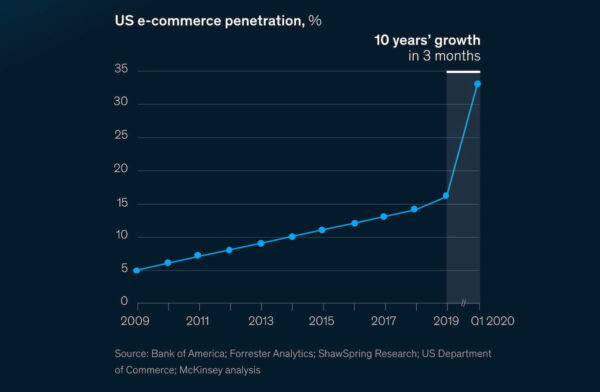
Since the early days of Amazon, ecommerce has been building up a storm. Every year, more and more people start to see the value of online shopping. Every day, new online stores and online shopping solutions popped up. In 2020, we noticed that storm become a tornado, thanks to the COVID-19 pandemic — suddenly, everyone was forced to buy online. And that trend is not dying down any time soon. These changes in buying behavior are permanent for many people.

Just look at this chart from McKinsey, which shows the jump in ecommerce penetration quite starkly:

Ecommerce is quickly getting hold of the US shopping industry

One of the most apparent successes in the meteoric rise in online shopping is Shopify. And with the following SEO tips for Shopify, you can benefit from that rise as well.

Domain Authority, Domain Rating, what are they?

 We feel like we should mention and clarify these concepts. You’ve probably known or heard about the concept of Domain Authority, Domain Rating, or Authority score. They are metrics developed by popular SEO software providers:

  • Domain Authority: developed by Moz. This is a score that predicts how well your website will rank on the search results pages.
  • Domain Rating: developed by Ahref. This metric shows the relative strength of a website’s backlink profile.
  • Authority score: developed by Semrush. This metric is used for measuring a domain’s or webpage’s overall quality and SEO performance.

Essentially, these metrics aim to quantify the quality of a website based on many factors. They all have one thing in common, which is the inclusion of a site’s backlink profile in calculating the score. For the Domain Rating metric by Ahref, the metric is purely link-based.

Let us clarify that none of these are ranking factors that Google uses. They are metrics specific to the software that uses them. While Google doesn’t use these metrics, you can still use them as a reference point in your SEO strategy. But don’t blindly rely on them as there may be flaws in how these metrics are developed or calculated.

Keep reading: SEO friendly URLs »

Choose a domain name around your branding

 Following the EMD update, branding became even more important. It makes so much more sense to focus on your brand in your domain name as opposed to just putting a keyword in the domain name.

For instance, you probably know LEGO.com, Amazon.com, or Google.com. It’s all about the brand. It’s something people will remember easily and something that will make you stand out from the crowd and competition. Your brand is here to stay (always look on the positive side of things).

In fact, Google’s John Mueller also suggested picking a domain name that’s more like a brand and that you can build upon:

Make sure your brand is unique and the right domain name is available when starting a new business. This might be the reason to claim more than one generic TLD or country code TLD – to make sure no one else claims it.

We mentioned that a (known) brand is usually easier to remember. For the same reason, we’d suggest going with a short domain name or a catchy one so it stays with people. Like Booking.com for instance.

Read more: 5 tips on branding »

More than one domain name for the same website?

Does it pay off to claim multiple domain names and 301 redirect all the domains to the main domain name? In terms of branding: no. In terms of online ranking: probably not.

The only valid reason we can think of to actively use multiple domain names for the same website, is offline and sometimes online marketing. If you have a specific project or campaign on your website that you’d like to promote separately, a second domain name might come in handy to get traffic straight to the right page on your website.

“Actively” is the main word in that last paragraph. As mentioned, feel free to register multiple domain names, but make sure not to confuse Google. Besides that, actively using multiple domain names for the same website will diffuse the links to your website. And that isn’t what you want, as mentioned in the subdirectory section as well. 

3 Audio & text e Books 4 Money Earning ! phone computer laptop used camera cars

Audio Book File & PDF files Listen & Read to earn more and know more Great information to earn money while you are spending time  ...